

Topics
Chapters
Full Content
Intros
Welcome to Unbiased Science, where we bring scientific method to the madness. I am your host, Dr. Sarah Shinman. My co-host Dr. Jess Styer is currently giving a guest lecture at Brown University. So we're very proud of her, but that's why I am flying solo today. But I am very excited to be joined today by Dr. Roberto Carurikio to discuss a topic that's very exciting and interesting to me in particular which is which is lupus. So I'm going to read a little bit of a bio here and then we are going to dive into our conversation. I've got lots and lots of questions. So Dr. Roberto Carurikio is the chair and chief of the division of rheumatology at UMass Chan Medical School and the vice chair of the lupus clinical investigators network clinical research program overseen by Lupus Therapeutics. He earned his MD and rheumatology training at the Catholic University of the Sacred Heart in Rome with post-doctoral fellowships at the University of North Carolina at Chapel Hill and the University of Pennsylvania as well as additional internal medicine and rheumatology training at Temple University. All while leading an NIH funded lupus laboratory. He previously directed the Temple Lupus Program and founded the UMass Lupus Center. His work has defined mechanisms linking cell death, hormones, the microbiome and infections to lupus pathogenesis and organ damage. He has published in leading journals including immunity, nature, and jamma and continues to lead translational lupus research and specializes specialized clinical programs at UMass Chan. Roberto, welcome to the show.
Thank you. Glad to be here. I
Thank you for the kind introduction.
Oh, absolutely. I mean, we honestly there is no one better, I think, to be here talking to us about lupus than you, sir. So, thanks for joining us.
Thank you. Thank you.
What Exactly Is Lupus?
And I just as a personal note, so when I when I think of lupus, I sort of grew up watching this medical show called House MD. And, it's a it's a it's a medical show about a diagnostician. I think he's an infectious disease specialist and he him and his team start out every time they have a case they do this differential diagnosis and they have this whiteboard where they write down all the possibilities and every single differential diagnosis has lupus included and so that but it's never lupus and it's kind of a running joke for the show that it's it's not lupus it's never lupus so that's kind of what I know about lupus but why don't we kind of start off by kind of defining for our audience what exactly is lupus?
Yes. So contrary to house the show that you the show that you mentioned in my case very often it is lupus because we do get patients referred to us because the our colleagues suspect that the diagnosis is lupus. So
But there is a good thing about that show and that is that I believe very strongly that it did raise the awareness of lupus nevertheless.
Wow. Among the population. So now people many more people are aware of lupus and that definitely helps the community the lupus community especially and perhaps even shorten the time that it takes to finally diagnose lupus.
Now what it is exactly now exactly maybe is an strong word for lupus. When I teach my the medical students about lupus, what I show them is the list of potential manifestations by which lupus can be can manifest itself. And that is everything that you can think of in internal medicine. So every organ could potentially be involved and any clinical manifestation could be there. So that's why house pick up that disease because it is very complex to diagnose. Having said that what it is it is at the quintessential systemic autoimmune disease. What does that mean? It means that this the same immune system that helps us defending ourselves from infections anything any infection bacterial viral fungal infection and even against cancer. Mistakenly thinks that our own body is one of those entities and it attacks them and because it's a systemic it can attack any it can attack any organ
Right
Now having said that most of the time lupus patients will manifest with certain specific type of organ involvement such as skin rashes are very common in lupus and are worse % by sun exposure.
The joints the joints in the vast majority of cases are involved as well. Lupus patients typically have joint pain and joint inflammation. One more organ that is unfortunately very often involved is the kidney. And so inflammation of the kidney is a major problem in lupus or at least for those 30% of lupus patients who have that particular manifestation. But the list goes on and on and on. Very often patients with lupus have anemia. So low levels of red blood cells. They have other low levels of type of blood cells in the blood such as the platelets which are important to help us stop the bleeding when we have a cat for example a skin cat and so on.
Is It Difficult To Diagnose?
Yeah. So I what I'm hearing is that there are it's what's what's difficult about lupus is that it involves so many different organ systems you mentioned it's it's systemic. So I imagine that might that patients experiencing these symptoms might face some challenges and some maybe diagnostic delays when it comes to clinicians picking up on this particular condition as the cause of the symptoms. Is that true?
It is true. It is better though compared to a decade ago definitely for a lupus patient might have taken up to two years three years to get diagnosed.
Right now I mean now that the awareness is stronger and higher then it takes less. Having said that, some lupus patients, I would say a good fraction of percentage of lupus patients do not manifest very obviously. Meaning that they might have one or two manifestations that do not make the whole loopus or do not allow a full diagnosis. So that definitely delays in the eyes of the known expert. So, so there is also that component that we do have criteria. The latest iteration is from 2019 which they do a pretty good job in classifying lupus patients although they're not used in clinical practice. They are primarily used in research for clinical trials enrollment or for mechanistic studies.
But not every lupus patient fits that those criteria up front. It might take months or up to few years to develop the full-blown the full-blown lupus and that is a known phenomenon scientifically speaking. Work from more than 20 years ago has very elegantly shown that lupus patients do not become lupus patient at once but is a multi-step event where the auto antibodies the signs in the blood of lupus comes first and then over the years more and more manifestations more and more involvement until the full-blown lupus can be can be diagnosed. So also that is one of the reasons for why there is in a way delay in diagnosis and I wish we had a market that we can we can screen all the population and determine who is going to develop lupus because in that case we could even stop from lupus to develop or perhaps delay the worse manifestations. Mhm. So there are different are there are different stages of the disease then is what I'm hearing. And
There are different steps to eventually develop the disease.
Okay, got it.
Are There Different Types Of Lupus?
I mean but within the disease once developed there are phases in which lupus patients have a low level of disease or perhaps a complete remission which is not common to really flares that unfortunately require hospitalization. Oh., are there and are there different types of lupus or is there just kind of the this one kind of umbrella term?
No, good question. Good question. I guess you're used to this. The there are different types of lupus. The lupus that I have spoken so far about is what is defined as systemic lupus. Right?
Now there are different types. There is one in particular which is relatively common and that is discoid lupus and what it is characterized by is really only skin manifestations.
This type of lupus for short DLE does not involve major organs outside of the skin. Then there are other types which are also involving just the skin and in that case they're called cutaneous lupus or subacute cutaneous lupus. Also in that case only the skin is involved and in a very small percentage of cases in those two types of skin lupus then the patient can evolve into a systemic lupus but it's a very small percentage 5% or less.
Okay. So having said that there are more rarer types of lupus due to a single gene mutation and there are several of those but those are very rare and constitute maybe one in 5,000 or more lupus patients. Okay. And they're called monogenic lupus.
Is Lupus A Genetic Disease?
Sure. Okay. So you I'm glad you mentioned genes because that's another thing that I wanted to ask about. Is lupus a genetic disease would you say?
Yes. Also a very important question. And then yes and no I will answer.
Yes and no.
Yes.
So the example that I always make to let people understand the relevance of genetics is the example of identical twins. Mhm.
So you would imagine that in identical twins both contract the same disease and when it comes to lupus what is called the concordance is 30% or so.
Right?
What does that mean? It means that out of 10 identical twin pairs only three in only in three cases both twins will develop lose. Oh,
The other seven will not only one of them.
So what does that mean? It means that the genetic component is very strong though. Very strong. Three in 10 is still very strong. But it also means that it's not everything,
Right? Less than half.
It is more. I'm sorry.
Less than half.
Yes. But it's still a lot though. It's still a significant component. It's just that it's not everything.
Sure.
, so there are other components. Possibly environmental factors which we are still looking into. We do struggle yet scientifically to determine which one are they but definitely that 30%
Indicates a very strong component genetic component and in fact we do know that what is what are what are called single nucleotide polymorphisms. So certain genetic abnormalities that might occur in more than 1% of the population specifically lupus are more common in lupus than in the general population but there isn't a single specific gene that we can say oh okay this gene is the is responsible for lupus outside of what I mentioned as monogenic but those are very rare the vast majority of lupus patients they have what is called a genetic predisposition to develop lupus.
But it's not an inherited disease, right? It takes more such as those environmental factors that we don't know
That there are a number of lab laboratories around the world try to identify those.
What Factors Are Important Besides Genetics?
Yeah. So maybe we could talk a little bit about that. I mean because I know you mentioned that it's it's it's a developing body of research right in terms of those environmental factors with those the 70% that is not that genetic you know that doesn't have that component. So what would you say you know are some of those factors you mentioned a few but what are some environmental risk factors I guess? Yeah. No. Well, sure. So, and by environment, by the way, I don't want to I'd to define the environment as well.
Yes, please do that. That's important.
It's not Yes. So, it's not just the external world of ourselves where we live or what we eat. It's also the hormonal
Yes.
Environment. So, estrogen and androgens. So the hormones that define
Our sex is for example lupus if you take 10 patients with lupus the chances are that nine are going to be women and one in men.
So
So it's overwhelmingly seen in female populations. Overwhelmingly seen in female in women
And yes and one of the factors environmental factors that we think are very are very important are the hormones because it's an obvious difference right
Having said that can we change that hormonal environment and make lupus better well so far we were able to do that only in mice
Mouse models not in humans. We have bits and pieces of information about what a female hormonal environment can do. For example, can better activate B cells. U B cells are the cells that produce antibodies and in particular in autoimmunity auto antibodies, right?
Those molecules that attack our own organs. So there is that but an effective treatment based on your hormonal environment has yet to be to be developed.
One other environmental factor that we think it's a it's a trigger at least it does increase the severity of the disease is sun exposure.
Right. This is something.
Yes. So patients with lupus are many patients with lupus are characterized by very harsh and exuberant react exuberant reaction to sun exposure and in fact we recommend every lupus patient to especially those who have a cutaneous manifestation skin involvement to really wear a nice hat and but also to wear sunscreens multiple times during the day because they tend to fade away with our sweating right?
Perspiration because of the risk of inducing flares.
Flares not just on the skin as rashes but also systemically.
Okay.
So that's another environmental factor. A third one that is also esta well established at least from a research point of view we still cannot really intervene as a on the factor is certain types of viral infections. One in particular is the EBV infection, Epstein bar virus infection which it seems to increase the chances for lupus to develop.
Having said that, having said that
More than 90% of the world population is infected.
So it's not an uncommon infection but it happens to be really detrimental in lupus. So there are lots of different factors at play here and I'm glad that you defined environment for us because oftentimes when we hear environment we think oh just you know the climate or what we're exposed to when we go outside and I'm I'm glad you kind of expounded upon that. It's not really it's really not that simple.
No it's not it's not another one that I would mention because I think is important
Please is the microbiome.
Oh yes.
So which is also environ it's another environmental factor. We have this agreement so to speak with the with the microbiome symbiosis. So an agreement between the two of us to survive meaning that we do need the microbiome and the microbiome needs us in our gastrointestinal system. But it appears that in lupus it is different and it is more pro-inflammatory.
Okay. Is it is still at the beginning as types of investigation because there is a lot to know in general about still to know about the microbiome and to discover.
Sure.
But I think it's quite established that the microbiome in lugus it is has a features of pro-inflammatory and more able to induce an immune response which makes sense.
How Is A Lupus Diagnosis Established?
Yeah. Because lupus is a constant immune response against this the person the individual herself or himself. So, switching gears a little bit, I'd to talk a little bit about diagnostics when it comes to so you've got someone comes into the clinic in the in the example of house MD, someone comes in, they're presenting with all of these symptoms and a lot of them are involving different organ systems. How do you go about establishing that lupus is the diagnosis for a patient coming in?
Yes. Well it's not it's not it's simple when the patient has classic manifestations right
But the classic manifestations are less than 10% so combined so it's not well yes so there is a term that in medicine is a fundamental approach to diagnosis and that is the differential diagnosis so when a patient comes and has a few manifestations then the physician Patient should think of few possibilities and from there test the patient with blood work and physical exam and perhaps imag put get come down to one or two and then eventually make the diagnosis and that's the lupus is not an exception that's what it is as I mentioned generally speaking a patient with lupus will have some form of joint involvement so in our is very typical and differential is between rheumatoid arthritis which is
Much more common in lupus and lupus and what really distinguishes lupus from many other autoimmune diseases or rheumatic diseases is really the systemic aspect
Right
So it might be a joint involvement but very likely there is going to be some other organ involvement
And very a very and a number of abnormality in the bloodstream. As I mentioned, people with lupus might have decreased red blood cells, decreased white blood cells and platelets, which are very important components of the blood that help in many ways. And so by targeting the physical exam, getting a good history of the patient, if you let patients talk enough, they will tell you what's wrong with them,
Right?
And then Yes. Yes. And then and then and then blood work very targeted blood work which we start with what is called auto antibodies testing lupus has the broadest types of auto antibodies to be tested and some are very specific for lupus so if the patient is specific for is positive for those specific tests which usually are called and I'm sorry for the jargon but anti-SM or anti- doublestranded DNA
The likelihood of having something lupus is very is very high along with clinical manifestations and history of the patient.
Sure.
So that's how we go by it takes some time before one develops the skills to distinguish between lupus and other diseases. But that's how we go by. Although admittedly it's much more complex than what I what I explained right now.
Are There Any Promising Treatments On The Horizon?
It always is. It always is
Much more complex. I just make it simple though.
So Roberto, what about treatments? Are there any promising treatments that are on the horizon for someone that has lupus?
Promising treatment is an understatement,
Right?
Yes. It's a it's a vast understatement. Because what has happened and what's happening in lupus is truly unprecedented. So for 50 years we didn't have any really FDA approved intervention in lupus and when I mentioned FDA approved that has a really an important meaning that is it means that whatever was thought to be effective in lubus underwent a rigorous investigation such as multiple phases of different multiple phases of a clinical trial until really proven that it made a difference in making people with lupus better. So that's what FDA approved means and it also means that it takes years to get an FDA approved medication because it's a it's it's a very rigorous mechanism to show efficacy and so we had nothing for 50 years. What was approved on those 50 years was really grandfathered into FDA because they were used before even the FDA was created until one med one medication showed finally that it was it was it had an effect in lupus that was 20 years 20 years ago or so
A little bit less. Fast forward only a decade from their approval then there was really an explosion of interest in lupus because it was a pathway to understand lupus along with the understanding of the pathogenesis of lupus and now we have three more approved interventions. Wow.
Possibly two more. Two more this year. But even more than that, even more than that, cell therapy, cellular therapy, which was borrowed by our colleagues in Germany from the hematology oncology world and tested lus
Has demonstrated a concept that we didn't really have before
And that is that we can induce with a single treatment at such a reset of the immune system and in this particular case for lupus patients a reset of the autoimmune system that what comes back is no longer autoimmune meaning what comes back doesn't that doesn't there is no lupus to be found and therefore there is no lupus to be found in the patient both from blood work to manifestations.
Wow.
And it's also durable. The first patient was treated in 2021.
Oh wow. So this is very recent.
Yes. They're still out treatment. No lupus flares. No lupus at all. They're off treatment since then.
Wow.
We our first patient was almost three years ago now in 2023. We were the first in New England and she's still fine. No lupus and no treatment. And because of that dramatic and unprecedented really result then now there are 30 40 clinical trials on this type of modality and at the same time that was the original way of treating lupus patients with KT or cell therapy but at the same time so over the last three years two more similar modalities ities have come to be tested also in lupus disease and the other connected tissue diseases that also don't have that particular treatments. So in other words or in summary there has been an explosion of possibilities to put lupus into remission in many patients. I mean it sounds this is almost you would you say that this is a true cure.
So I'm a little bit hesitant to say a cure and there is a reason for that and I can explain why. The so the immune reset. So this type of treatment really get rid of those autoimmune cells in the tissue where the disease is in the kidney in the lymph nodes in the split wherever the disease is. This treatment will kill the cells that are inducing the disease and then those cells will be reproduced by the by the bombar. So they will reconstitute
Right? But when they come back they are no longer autoimmune they no longer induce the disease.
Okay.
So it seems a cure. What I to what I to call it is a clinical cure.
Sure.
And the reason is because those cells that come back even though they don't seem to be autoimmune they still carry that genetic predisposition that I mentioned before.
Right? So
Yes, so we did get rid of the active part of the autoimmune cell, but we did not get rid of the genetic part. And so only time will tell how long a single treatment will be able to last.
Absolutely.
Will it last a lifetime? Well, we are still waiting and we will wait at
It's very for a very long time.
No. Or we don't know. We don't know. Or will it last few years? Either way either way it is a success because we are giving patients the ability to feel disease free and drug free for quite some time and we can repeat the treatment because there are different modalities now that we can redo the same treatment and possibly give the patient a very long very long remission period of time. So, but to call it a cure, I a strong word. I don't I don't I don't Yes. But I but I would add this though.
It did give us a pathway to a cure.
Okay. That's
It is giving us a pathway and the means to think about how to cure this disease. That I think I can say.
What's Giving Hope Right Now In Science/Public Health?
All right. Fantastic. I love I love it. I mean, we always to end our episodes with, a little bit of hope and know this sounds this is very promising, but I wanted to ask you, is there anything else that's kind of giving you hope right now for people with lupus? It sounds there's just so much that's happening now that even, a decade ago wasn't available.
Yes. So, so before I tell you what gives me hope, I do want to say though that this is not I mean the treatments that I'm can that I mentioned that reset the immune system gives patients a very long time of remission drug-free
They're very complicated they're very complex treatments and in collaboration with my co-chair Sashik and other members of the losing that you mentioned before, the Lupus Clinical Investigator Network, we published a pathway for investigators around the country and around the world to set up those treatments with their hematology colleagues. Because what we need is more and more patients to be treated with this modality, right? So that one more patients can enjoy it and take advantage of that and two demonstrate that this is a true pathway to a cure and a clinical cure. So you know I would I would to make sure that people know about this. So that there are there are ways to get help to initiate those treatments those cranial trials because right now there are only few specialized centers including ours but few specialized centers that they can offer this modality. And that publication can help guide the process which is a complex process,
Right? And that was sponsored by the Lupus Research Alliance which is doing a spectacular job to help patients with lupus and help also fund research that has led to approval of those medications but also to those interventions that are very complex. So kudo to them as well. Now what gives me hope? Well, I think I did mention already a little bit what gives me hope. So if you there is a website hand I mean run by our government which is called clinical trials. Gov. You can anyone can go it's public and can search for any clinical trial or the vast majority of clinical trials ongoing in United States but also in the rest of the world. And there are around 150 undergoing in the world in lupus and lupus nephritis. So that is specifically lupus neatis. So many more in general lupus. So this is an explosion of possibilities of really taking care of every single lupus patient irrespective of the type of manifestation they have. So that is never that has been unprecedented. Not no time before there has been such a possibility to really make this disease just as if we were a little bit of hypertension that needs a pill to be treated and you forget about it. You do your exercise, you mind your diet and you'll have a very long and healthy life. We are very close to that because of the explosion of understanding of lupus pathogenesis and the explosion of technology that can help mitigate this autoimmune system. So there is more than hope is almost a certainty. 20 years ago I had a different conversations with lupus patients. The conversations that I have today is just I have so many options. We have all these options. Let's start trying one and see which one best suits you. So that's a completed world and 10 years from now I hope I can tell the patient here is here is the treatment that we're treating today. Here is the treatment 10 years from now I can tell you that if we go through this you'll have perhaps a decade of no lubus inside and then maybe in a decade we'll repeat the treatment if something comes back. So that is a hope today but it might become a reality a decade from now. Amazing. We've come such a long way since the days of House MD, haven't we?
Yes.
This is giving me hope, too.
By the very long way. Yes.
Dr. Roberto Cario, thank you so much for joining us. I learned a ton from you today and we're going to link some of the places we can we can find your research and your work in our show notes. And just thank you for joining us.
Thank you. Please link our lupus program.
Absolutely. For sure. There are lots of
We can. Yes.
Incredible sources that and our listeners can go and check out all of the wonderful work that you guys are doing. So thank you again.
Thank you also you thank you for doing this as well.
Oh, it's it's it's our pleasure. We love it. And I would just to thank all of our listeners. Thank you so much for tuning in this week. We hope you learned a thing or two. Please join us next week on your trusted source for Noonsense, Just Science.
Scientific References
Similar Posts

Nature Is My Hobby, Not My Doctor
Explore how you can appreciate nature-based practices and maintain a holistic lifestyle without abandoning scientific evidence. Discover the balance between wellness curiosity and evidence-based health decisions.
Read More →
Let’s Hear It From the Boys
Young males represent a significant gap in public health research and intervention strategies. This blind spot has real consequences for disease prevention, mental health, and overall population wellbeing. Understanding sex-specific health needs is essential for effective public health policy.
Read More →
The CeraVe Lawsuit, Driscoll's Strawberries, and a Peptide Explosion
Two major product scares expose how wellness trends and media coverage can amplify fears. Learn to critically evaluate health claims and distinguish real risks from manufactured panic.
Read More →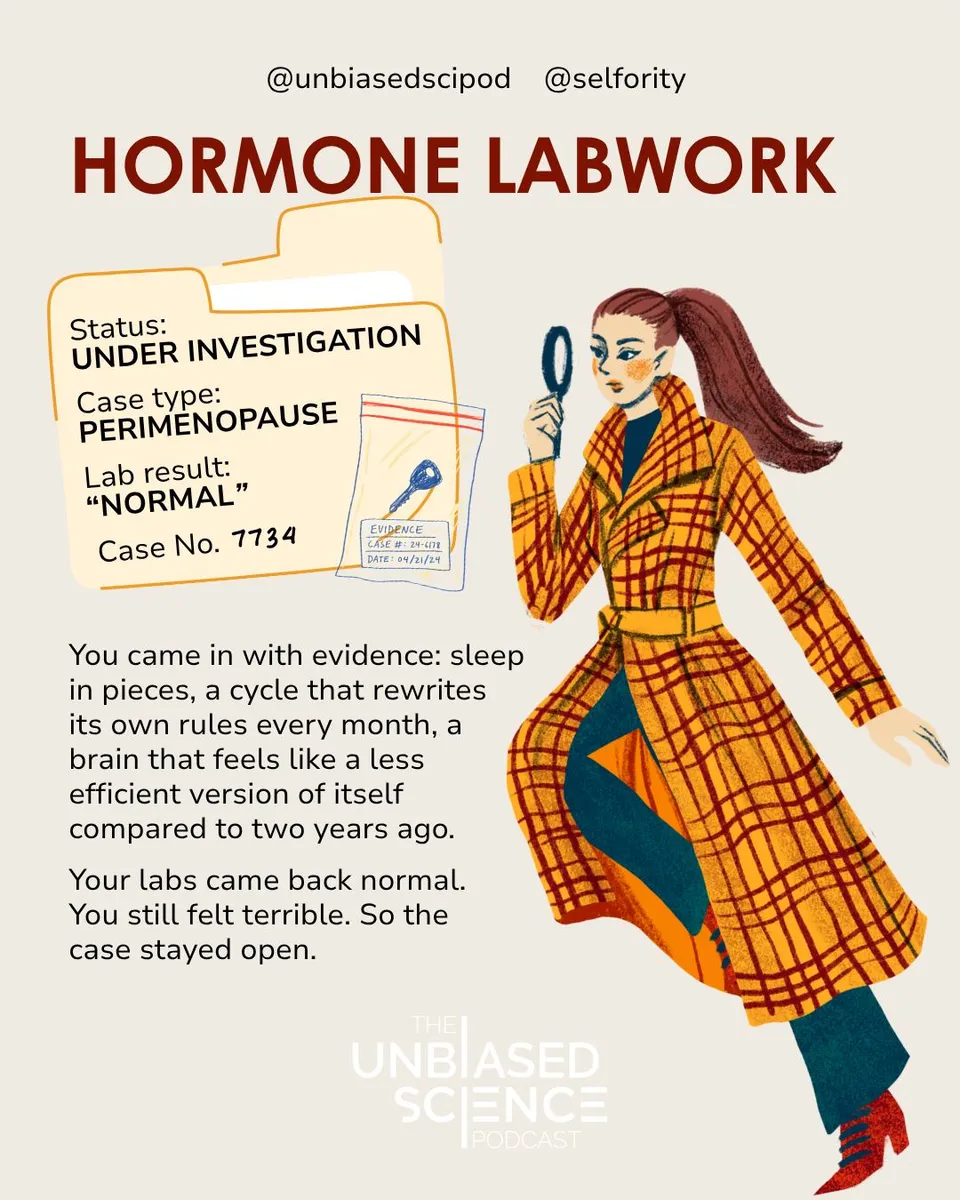
The Perimenopause Case: Why Your Symptoms Matter
Normal labs but exhausted? Brain fog? Changing cycles? This is perimenopause - a clinical diagnosis based on your symptoms, not test results. Follow the investigation into why this condition is often missed and why your experience is the evidence that counts.
Read More →
The Benadryl Challenge: Why OTC Drugs Aren't Always Safe
Benadryl abuse among teens is surging, with over 7,000 poison center cases reported in 2024 - nearly 14% intentional. The viral 'Benadryl Challenge' trend highlights how accessible medications can pose serious health risks when misused.
Read More →