

Topics
Chapters
Full Content
Intros & Bios
[music] [music] [music]
Leah's Personal Experience
The Disparity Of Alzheimer's Amongst Women
Welcome to Unbiased Science, where we bring scientific method to the madness. I'm your host, Dr. Jess Styer, and today we're talking about a really important topic, a topic that we've spoken about before, but now we're going to get some real-world information about the topic of Alzheimer's disease. And in particular, we'll speak generally about the disease, but also we want to focus on how it impacts women. Now, y'all might notice that my amazing co-host, Dr. Sara Sheinman, who is a neurobiologist and an expert in this very topic, is not here today. She is dealing with some personal issues. We wish her all the very best as she navigates. You will see her and hear from her again. Just wanted to disclose that because you might be surprised. This is This is her This is her area of expertise. Mhm. Would also to disclose and thank the American Medical Women's Association and Eli Lilly and Co. For sponsoring today's episode. We're really grateful for their support. All right. So, without any further ado, I'd love to introduce the two lovely ladies who are joining me today to talk about this. First is Leah Fisher. Leah is a writer, psychotherapist, amateur photographer, and enthusiastic traveler. Her memoir, My Marriage Sabbatical, a memoir of solo travel and lasting love, combines these interests and describes a year of traveling alone in her 60s and its surprising impact on her husband, herself, and on their marriage. Fisher [snorts] has revealed that after the events in her book, she received an MCI, a mild cognitive impairment diagnosis with elevated Alzheimer's risk. She offers insights on how couples cope with health diagnoses, the importance of curiosity over avoidance, and people's desire to be treated with patience, kindness, and continued love as she faces an uncertain future. Incredible. Now based near Berkeley, California, Fisher is a self-proclaimed wild and crazy grandma to four young grandchildren. In a previous chapter, she worked for 35 years as a psychotherapist, marital counselor, and corporate consultant. During that time, she brought her expertise to television programs including the Oprah Winfrey Show and 60 Minutes and media outlets including Newsweek and The Wall Street Journal in their work and family column. To spread humor and awareness, she's co-written the song If I Don't Forget with Laura Fanning about living with MCI. Leah, thank you so much for joining me today. It's such a pleasure. We are also joined by Dr. Neelum Aggarwal. Dr. Aggarwal is a population cognitive neurologist and clinical trial leader at Rush University Medical Center. She serves as professor of neurological sciences and director of the Cardio Cognitive Clinic at the Rush Heart Center for Women. Incredible. Her work sits at the intersection of cardiovascular health, aging, and dementia prevention with a particular focus on women's brain health, stroke recovery, and community-based research. Since 1996, she has been the examining neurologist for large observational cohort studies and the site principal investigator for multi-site clinical trials through the Rush Alzheimer's Disease Center and national consortia. Over her career, Dr. Agarwal has conducted over 2,500 in-home neurological evaluations across Chicago's diverse communities and with her colleagues and field teams continues to focus on equitable recruitment into clinical research. Here, here. She currently serves as site principal investigator and steering committee member for multiple Alzheimer's clinical trials and national working groups focused on sex differences, biomarker harmonization, and dementia risk evidence. We're going to get into all of this. Her mission is to advance precision prevention strategies that connect heart health, brain health, and community engagement. Dr. Agarwal, thank you so much. Thank you. All right. So, we know we're going to talk about Alzheimer's, but I really want to set the stage on why this is a women's health story. So, two-thirds of Americans with Alzheimer's are women. I did not realize that there was, you know, such a high rate among women in particular. So, Dr. Agarwal, why hasn't that translated into how we screen, fund, or talk about it the way that we do with other things breast cancer? And what should that disparity mean for how clinicians approach midlife visits? Yeah, I think, it's it's it is something when you say those numbers even to me, you know, and working in the field, two-thirds. I that's a very high number and I when I think back, and I was saying, before we came on today with Leia that we kind of got used to the fact that, well, when there's Alzheimer's disease, women are there to provide the care. Women are there at the visits with a loved one. And well, they're they have a role and we're not really looking at them in a in that kind of patient way. Now that the research is really coming up to suggest, "No, wait a minute. We have the research findings and we have more women coming into the clinics talking about memory issues." Now we're having data to support what you just mentioned. And I think that's changing a lot of different things. Before when there was no data, it was kind of, ", this is where it is." I mean, Leah, you've heard this before. Who takes care of Alzheimer's patients? It's the daughter and the daughter-in-laws. And any practicing physician is going to see that for sure in their in their room. So, I think now it's the data, Jess, that's coming through on different areas in women's health to say, "Whoa, this is now potentially leading to dementia." And the more we have that data, the mission is to get that data out there to the public so they understand what that data means. And that's a place where we love to help., really get that awareness and that information out there. So, a follow-up question. So, we're talking about this disparity or the fact that, I said, two-thirds of Americans with Alzheimer's are women. What does the evidence support as to why we're seeing that health that sex disparity? Well, first of all, it was, age came comes to mind for everybody. We do live longer than men. So, longevity is an issue here, but it's not the only thing. And I think that has been one myth we've had to kind of debunk that, "Oh, it's really the same. It's just because you live longer, you are now entering an age that the risk of developing the disease is higher." Mhm. And that's why you're going to get the disease. Mhm. That's that's only part of it. We are thinking it's going to be age is number one. Number two then is chronic medical conditions. Things that we kind of never really thought about, but in a big way are really coming up to suggest well maybe these risk factors are higher in women than previously thought and that could then be leading to the development of a dementia and maybe bringing on Alzheimer's more so in women. And then of course hormones. And we know this with our hormones, estrogen, progesterone, going into the perimenopausal stage. What happens in that stage of life that somehow may accelerate findings that we see in brains of folks that develop Alzheimer's, for example, with low estrogen over time. Or if you have genetics leading with APOE, how is that accelerating amyloid in the brain? So I think there's a multitude of different things that may be unique to women that show up more in women and that could be all together making it come together as an increased risk for us. So this is a big area of research, right? Sounds there's still some unknowns that we're trying to navigate. Is that safe to say? It's very safe to say that. There are a lot of different unknowns and, if I was to have a colleague here from, a bench researcher here, they would be talking to me about mitochondria and cellular mechanisms of what is happening. And then, if I have someone a systems person here looking at the endocrine person, they'd be talking about the endocrine changes. So it's it's really what I think about, it's it's a comprehensive way of looking at things, but we are saying no, it is not just age. It is much more than that. Leah, first I want you so much for your candor and for talking about this. It's it's really incredible to have this, first hand account. So, would love to hear more about your experience. Can you walk us through your experience? What were the early signals? What did you and the people in your life initially attribute them to? Just can you just talk to us about how you came to receive your diagnosis? So, before I respond to your question, I want to just say I think it's a community service when people who have this diagnosis, but are still highly functional, are willing to speak about it because if the general public only associates cognitive impairment with the advanced stages, there's a great deal they don't understand about this disease. So. So, how did I first know it? Just to back up a little, during perimenopause, women are all kind of goofy. I felt I was considerably goofy than others. Okay? And my demographic was one where we were told not to take extra hormones because of the risk of breast cancer. Okay? So,
[snorts]
I first knew something was amiss about 7 years before I was diagnosed. And I went to get a baseline study. And I was told that I was testing way better than people my age, about the level of people who were 10 years younger, and that the only symptom was that I thought something was wrong. And I got the same diagnosis for several years. COVID no testing, no face-to-face contact. And then when I came back, there had been some decline. And then the next year, there was enough decline that I qualified for a diagnosis of mild cognitive impairment. So, and my first reaction No, there were two simultaneous reactions, and one was my whole body shivered. And the other was great relief that finally the neurologist knew what I'd known for quite a long time. So, finally Leia, so finally the neurologist called it. That's what I said, right? Somebody had to call it. Right.
And yeah, the just we see that quite a bit. I can tell you that relief when people come in with a complaint. And in one way it's it's it's exactly what Leia you said. It's a relief, but in the other way it's, "Oh gosh, now what?" but it's not being heard, right? That you're something's not quite right, and I, I always say to people, " something's not quite right. We have to understand what that is." But to not be heard is horrible when it comes to these kinds of things. It was a matter of not being matched. Yeah., I was listening to the inside of me. They were testing the outside, and they didn't match. At the point where they matched, I felt I had a partner. Right.
So, this is this is a really important conversation. The other thing that we're hearing we opened up a question box on our page for folks to submit questions about this topic. And one of the main things we were getting, not exactly questions, but frustration, frustrated messages from people who said particularly women, who said that they feel that their symptoms are often dismissed across medicine, not even just specific to Alzheimer's or cognitive issues. And that early signs might get attributed to things menopause, you know, menopause brain or stress or burnout or anxiety when there are other issues, right? There are there other factors at play. So, I'm wondering, and I don't know, maybe Dr. Agarwall or Leia, from your from your first-hand experience, how does that play out specifically when it comes to cognitive evaluation? And are there specific failure points that clinicians should know about and then be extra conscious about? Yeah, I
Conscious of it. Sorry. It's really true. No, it's really true that dismissiveness, oh, you're you're working too much, you have too much on your plate, you're stressed. You And you know, it's there. The stress is there, okay? I think getting back to when you asked, what's happening with women compared to men, we handle stress differently. Our bodies handle stress differently than men. And what that means is that we may be in a heightened stressful stage a lot longer physiologically than a man would be. And that impacts everything including our thinking ability, okay? So, I think when you talk about the dismissiveness,
[snorts]
It's a real problem. I always advocate for doing some testing first before you dismiss it as something else. Can we do a screen first? Let's do a memory screen, and now let's go through some of the factors that could be contributing to some of this. But that makes people, at least in again, my experience, and Leia, I want to hear yours, but I think that makes people feel heard., yes, let's take a look at it. And then, the kind of screening we have to think about., we screen very well. Leia tested very well. This is not uncommon when you're educated, you're testing well above the norms, but subjectively, you're, it's not right. Something's not right. And for women, we know that we have verbal fluency is much better in women, and we can hide the fact that we're having issues because we're testing higher on certain cognitive tests that haven't been really curated, if you will, for a woman's a sex difference battery, if you will, you know, to look at it. So, that's how one of the thoughts of why things get missed with us, is that we just test better over time.
Primary Care's Role In Alzheimer's Diagnosis
Mhm. Leia, did you want to share any more about your specific experience? Y- yes, and also some context for it. It seems to me that at the beginning, the symptoms of cognitive disease look very similar to normal aging cognitive decline. And I found that by showing up and being really kind of assertive, not kind of, being assertive about something is wrong. I hear I'm testing great, something's wrong. I got what I needed. What happens is you tell your friends, you tell other people that there's something wrong, or even that you have mild cognitive impairment, and they will say, "Oh, no, I do the same thing. I can't find my keys, blah." And well, two things happen. My inner brat wants to slap them. Okay, I've never done it. I've never done it, but that's the emotional feeling. What I say is, at the beginning of this disease the symptoms are exactly the same and it's only as time goes on that the differential starts to show. What I think emotionally and psychologically people are saying this is too heavy. I don't want to get close to this. And so, hey, this is normal, da, but it's it's really don't scare me. And that comparison, right Lea? It's always that well, if you oh my goodness, you're not she is. I mean, you're way better than it's always that comparison that goes on and I think when as we start to normalize these conversations, it's all about you. I'm not comparing you to anybody. I'm talking about you., and I think we have to really make it truly, tell me what it is. I one thing that does get missed when these conversations start, Jess, is that we don't talk about the what we say the activities of daily living enough. So, we, memory is one thing and everybody's perception of memory issues really is very different. Some people will say to you, no, that's not a big deal. But then I go into tell me what you do during the day. Has it has things changed? How have they changed? Has this interfered with your ability to do whatever? That's where people really come out and talk a little more. Yeah, I used to be able to, you know, whip up a recipe in 5 minutes and I've been making it all my life and now it's taking half an hour. Okay, as a neurologist, that's a flag in my mind. Something's going on,? And I those are the kinds of things that health professionals, physicians, we can do better at to get people talking about that first. Because that kind of builds in our mind, no, this is something's happening. It's interfering, even if the testing is normal. It's, no, this is this is impacted me. Or, for example, bridge. I've heard so many times people losing a bridge partner. Okay? All of a sudden, getting being dropped as a bridge partner. And when you look back, -huh, that's when the cognitive issues were really showing up. Not that good of a player anymore. And yet, it was all thought about something else, a little disagreement about something else. So, I think we have to do really well to talk about those activities of daily living, as we say. And how is it impacted you? So, this is so interesting cuz I think this conversation is valuable for both HCPs, for clinicians. I think it's really important that they hear Dr. Agarwal what you're saying and other things outside of the verbal memory test, right? Which might be biased if we're starting at a higher baseline. So, this question around activities of daily living, I think that's really interesting. Is there anything else that clinicians maybe could ask for, could sort of have in the back of their mind? And a follow-up is I guess I'm just thinking practically, are we talking mainly about PCPs, primary care docs? They're I'm trying to think about the actual evolution of care to getting a diagnosis., what's the typical entry point? Am I making sense? I don't know if I Oh, you're totally., I'll I'll answer this and then I want to hear Leia's experience about what her entry point was. So, typically, it has been the primary care physician's office where a lot of these things could be picked up, okay?
Mhm. Where we hear that the a patient may talk about something and then the primary care does the what we say the workup for this and it's by guidelines and, or tests are ordered and then at times the referral is made if it can be to a neurologist to really kind of tease out really what's happening here, okay? If it's unclear that this is really a change in memory and thinking MCI. So often neurologists are the ones that are making the diagnosis of MCI. Mhm. A primary care at times won't really make that diagnosis. They don't want to make that diagno- they're not sure at the time, but that's kind of how the care would go through. Geriatricians are involved here. If you there's no neurologist, it could be a geriatrician takes care of it. Geriatric psychiatry is making these diagnoses also, okay? So you have a group of people that are involved in the health system that could be picking this up, but we know that there's gaps and people are being missed. I have been advocating for a long time. Specialty doctors are picking this up. And specialty doctors I for example neurology, cardiology, rheumatology. These doctors are seeing patients and they are per- probably giving a comment to them in the exam room, ", my memory is just not the same." I don't know. Before I started the medication, it's not the same and now after and I think we have to start talking broadly to all the physicians. If you hear this comment, you should know how to number one refer, educate, and take it seriously because it is patients are saying, "I have been talking about this forever and nothing is happening. Nothing is happening.
Right. And I think we really have to start thinking about this from more of a comprehensive pathway, because a delay to get to be the diagnosis is quite long, about 3 and 1/2 years to get a diagnosis for a lot of people who are going through the healthcare system. That's long. Absolutely. Leya, did you want to share a little bit? Well, just to mention that it's my understanding that a blood test is becoming available to give some indication that there is a concern, and that making that making a primary care doctors aware of it, and building it into their education or their continuing education is going to help as Dr. Agarwal was saying, to get that flowing into the specialties after that happens. So, this is this is exciting new capacity. Mhm. Yeah, I think those [clears throat] those markers are really important, Leya, though the blood test. I can't say though, there's always a concern when a new test comes out. Are you equipped to handle the result of those tests, right? And I think that's the really important thing we also don't talk about., we order tests, but we also have to understand, is there a pathway after the test to do something? Yes. And if it's not there, I'm just saying we should pause for a minute, because that creates more anxiety and more uncertainty when you don't know what the pathway would be. So, the blood tests are coming out, and the big blood test is p-tau 217, which is an important blood test. We're working very hard in research to understand how p-tau behaves in people with chronic medical conditions. Mhm. This is really important. So, when you get a test done and the test comes positive, you really want to be sure that it's really measuring what it's supposed to measure, right?
Right.
And in this case, it's giving you evidence that they're already is signs that they're Alzheimer's dementia that Alzheimer's disease is frankly happening underneath the surface, if you will, okay? But if you have chronic kidney disease, you're going to get a false result on that test.
-huh. Okay.
Interesting.
Yeah, if you have and we're learning more and more, if you have heart failure, heart failure, your test results may not be accurate for that marker. If you have other conditions, if you are obese, and blood volume shifts are here occurring, that test may not be accurate. And we're trying to raise awareness to the primary care and to other physicians ordering what patient probably should not get this test done. Is really important, too, right? Because you don't want to be telling someone that this is positive and then having them go down this pathway only to learn that mhm that was a false positive. Mhm.
So, we're being cautious, but we do feel it's just one test in addition to the whole clinical workup Yes.
That we have to do because the concern, I can tell you from my colleagues, is the clinical workup is not going to be done as complete as it should be, and the test will be done before and I think from a physician's point of view, I think from practicing doctors, they're going to be wait a minute, we need to think of it through for the for the whole process to be, integrated and seamless. Yeah. So, it sounds educating these primary care doctors Yes. In terms of what conditions would cause false positives, but also for them in either case to move people along to the neurologist.
Leah's Process Of Receiving Her Diagnosis
Right. And from what I understand, there are way fewer neurologists who are who have experience and or specialized in dealing with cognitive issues than the other things neurologists do. So, it will be wonderful if and when there can be more specialists. Yeah, I agree. I mean, we are educating. There's just there networks that are there called the ADAC network that is actively looking at this with an edge and making sure education is out there. Yes. Leah, were you going to I think you were I forgot I know we were talking about so many different things. I think we were talking about how your entry point your diagnosis. Could we return to that? So, this is really very telling and very perfect. I don't really remember or understand what that question is. If you don't mind, will you clarify
Absolutely. Oh my gosh, totally. So, just curious and apologies you may have already touched on this, but for folks who are curious what how a diagnosis could even come about. So, I'm curious was this were you was it a visit to your primary care physician that prompted this discussion?, how did this even come on the radar? I know you talked about some of those early signs. It was 7 years prior, I think you said, to receiving your diagnosis you started having signs. But, what did the actual process of receiving that diagnosis look for you? As I say, I initiated it because I felt that something was wrong. Okay. Quick example. This isn't this is outside the normal I don't remember where my keys are. I'm having coffee with a group of friends. Finish my coffee, say goodbye, take out my car keys, toss the coffee cup in the trash, go to my car, and look down, and the only thing in my hand is the empty coffee cup. Okay. Toto, we're not in Kansas anymore. Got [laughter] it. Okay. So, that was what made me ask for a baseline study. And I had the good fortune that the neurologists were respectful. They didn't say "Oh, you definitely do." They didn't say " you don't." They said, "Let's keep looking." And things did change over time. I would highly suggest to people maybe even whether or not they have symptoms that getting a baseline study it gives you something to compare it with as time goes on. So Oh. Please. Please. I think that is, and I'm so happy you said that, Lea. I think that is so important for so many different reasons. I've been doing this a long time, and when it comes to cognition and thinking, it's it can be very intimidating, okay? I've often said, in the clinic, people really don't want to come see me cuz they're worried what am I going to take away from them? Right. You know, am I going down the pathway, well, you can't do this, you can't do this, you need to have somebody here. And my stance has always been, mhm, I want to see what you can do. Let's see what's happening. Let's investigate this, and I want to keep you as independent as possible. In the end, everybody wants independence. Yes.
Everybody wants to be independent. Nobody wants to be dependent on anyone. Including spouses, children, etc. So, I think having a baseline, when it's when you talk that and when you couch it that, the baseline people are open for it. Because they're, yep, we you're going to find out or we're going to talk about where I am. And what it also does, Jess, is it kind of sets the discussion on the same page with everybody else involved. The family, the sisters, the aunties, everybody Yeah.
Patient-Doctor Dynamics
The Importance Of Communication In Diagnosis
Is on the same page. This is what the baseline is, and then you start from there. And the physicians say to me, "Thank you. Thank you for calling it and giving us a baseline. Now we know where to work from." Okay? From a physician or a specialist will say, ", I see it in the note. Now I understand. Okay, maybe we need to think about this now when we treat whatever condition the person may have." I'm I really advocate for a baseline just for that reason, not necessarily only treatment, but just so that everybody can be talking the same language when it comes to cognition. So, from In perspective of someone who did receive a diagnosis, what I would want to share with physicians, either primary care physicians or specialists, to understand that all of us have different temperaments. And that how you talk about it, what you suggest, that to the extent that you understand the temperament of the person in front of you, you'll you'll handle it in a different way. Harder for the specialist, but for your primary care doctor, there are people who are really reluctant to act to approach what might be bad news. These are the people who will end up denying it, and everyone around them knows something is amiss. There are people who are curious, and I think you're probably already getting the idea that I'm one of those. And there are people who just have an attitude of I'll take life as it comes to me. Right. And knowing who you're sitting with will make a big difference. So, my curiosity took me for a baseline study before anybody else thought anything was amiss. Mhm. When I was recently offered the possibility of having scans for the presence of amyloid and tau, I wanted to know. I, if it was possible to know, I wanted to know. Mhm. And it turned out I had plenty of both in my brain. I'd rather know than not know. Mhm. But that's not everyone. And for the person who would prefer not to not to have to face something that's frightening. For the doctor to just soften that, you know, this may be an issue, it may not. I don't want to jump to conclusions. Let's get a second opinion. Let's Let a specialist look. They're not going to make anything bad happen to you, but if there's an issue, then you and your family have a chance to think about it. Can I just tell you that you're both making this the easiest recording ever because Thank you. I mean, you're answering so many so many important questions. You're addressing so many important things. What I'm curious [clears throat] about, so Leah, you've acknowledged it. You're You've got chutzpah, right? You Sounds you're curious. You were not shy about advocating for yourself, but to your point, not everyone is going to do that. They're not going to know to do that. They're not going to have the means to do that. So, I started saying before, I feel this episode is really hitting two different tracks, right? I think it's important for people for patients for people to know maybe you can ask for a baseline. Don't, these are some things that you mentioned before that you could be mindful of that are important to bring up at your clinical encounter. But then maybe also it's important that clinicians understand, exactly as you said, Leah, not everyone is going to be forthcoming with these things. And so, it's great I'm so thrilled that we're putting this on the radar of clinicians. And just to confirm, Dr. Aggarwal, maybe I could ask you. So, would it be It wouldn't be out of line then for a patient to ask for a baseline cognitive assessment? Is that what you're saying? Would that Do you think that would be received well by a clinician?, if a patient came to them with that? And then also obviously it be great if clinicians came up, did that for their for their patients without being prompted as well. Right. So, I know I don't think it's out of line at all. And I really don't. And if the patient doesn't say it often, the adult kids who are in the room, who are there, they're asking for [snorts] it. And again, I always welcome to hear from adult kids in the room. Mhm. Because I'm, again, this nobody's this isn't existing on an island. You are not an island with this. People are being affected. If you feel something, you have a network of people around you that are also can be affected at varying levels. I would say though, anyone older than 65 going in to see a primary care, they have the Medicare wellness visits. Well, in those visits, it's in there that you can do a cognitive screening. And the physician can bill for it, meaning they can get paid for that kind of assessment. And I think that's a nice way and entree in for an older adult to say, let's say 65, I know there is a visit that can be done and I really would to have that screening done. That's the baseline. Okay. That could be just all you need. And what it does is it starts the discussion then about brain health and cognition around a visit. So, that would be my entree in. And if patients feel, oh, I can't say that to the doctor. Mhm. Well, yeah, you can. If you're 65, you can. Some patients don't want to say anything. You're the doctor, you tell me what to do.
What Life Looks Like For Leah Now
Right. Right? And it's true. And I have a lot of patients that. Well, I'm here to see you. Mhm. And I'm, I get that, but we have to work together to see what we both want to do, and see how, so I would say that's the first entree in. As a physician though, I would say, again, get in the habit of doing these screens as part of your visit because it's going to help you as you see people over time to know truly what is changing. And then, you had you were here 6 months ago and this is what your score was, let's say, on a MoCA, okay, a MoCA test. There's so many different ones that can be done and I always tell physicians, choose the one you're comfortable with. Mhm.
But this was your score and now your score has changed. Wow, what's been going on? People are okay with answering., oh, it's changed. Well, this is what happened. I lost my I lost my relative and I think this has been I've I'm really feeling that or something. But yes, you can ask and I think it's important to do. Leah, can I ask you I hope it's okay to ask, but can you share a little bit about what does life look for you now?, what how is this being managed for you? I have several responses and you're going to help me remember both.
[laughter]
If I have three thoughts and I can remember two of them, that is a very good day. So ask me that question again, please. Yes, I was asking how are you managing your diagnosis right now? What does day-to-day life look for you? Okay. Here are some of the symptoms as this MCI progresses. And Dr. Agarwal, you'll probably be able to give the medical name for it. Okay. I will be looking for the olive oil to make the salad dressing and I can't find it, but I know I had it my hand 60 seconds ago. And I look and I look and I look and I finally find it right in my line of vision. Mhm. So that's one and it's very annoying and irritating. One that is far more distressing as this thing progresses has to do with losing a thought. Now, I'm losing the thought of the question you've asked. Mhm. All right, I can live with that. I'll be sitting in front of my computer and there's something important that I need to look up. By the time I've lifted the lid of my laptop, I cannot remember what it was. Mhm. And that scares me. That's the beginning of not being functional. Mhm.
And at this point, the functional isn't bathing myself or making a peanut butter sandwich, it's being able to live the life I've been living. I have the good fortune to be on the board of a wonderful organization called Voices of Alzheimer's. And they are an advocacy organization. I love working with them. I'm respected. I give an opportunities speaking with you. And at a certain point if my thought gets interrupted, it's easy to say, "Hey, repeat that question." Right.
Management & Treatment Options
But if I'm halfway through a sentence and I can't remember what I wanted to say, that's the beginning of not being able to do the more high-powered things that I've enjoyed doing. Mhm. So, here I am an author and a public speaker and I get halfway through a sentence and I don't know where I'm going. Mhm. Now, at this point, I make light of it. I will jokingly say, the expression, "This is your tax dollars at work." I'll say, "MCI at work." And or I'll say to people one of two things. And I'm I'm quite comfortable doing it at this stage of the disease. I'll say, "Give me a minute." And just pause, and eventually it comes back. Or I'll say, "Help me out here." And I can be I was doing a book launch and trying to explain something. And with 95 people in the room, I said, "Help me out here." And someone in the audience filled it in. So, not being horribly embarrassed and ashamed is a great coping skill. And not being able to locate the olive oil in front of your face is a really different category from not being able to remember in the time you lift the lid of the computer. And if anything is going to put me out of the game, it's that. Yeah, it's that agnosia where you're looking or if I if I was in the kitchen with you, Leah, and I'd say, go ahead and get me the pan and you're the visual of what the pan should represent is not there. And, looking at what's right there. Oh, that. This These are the things when we talk about ADLs, activities of daily living, instrumental ones, that get you through the day. What Leah's saying, this is a roadblock., she's making a salad dressing, and now we've hit a roadblock, and that's where the frustration comes, and that's where people really get so frustrated. And I keep saying the goal is to keep the frustration down so the thinking can stay up., when emotions go up, intelligence goes down. I used to say it all the time and what it means is that if you can keep yourself calm and what, Laya, what you're saying when you're asking help me out here, that's keeping an internal calmness with you to keep it going because, if it stops, it's a it's hitting a roadblock and then everything stops. And I think one of the things with MCI, it's it's so important though with MCI that you're doing the things that you're doing so people can see that you're you're able to do things. It's just that there's certain there's certain things for help that you are going to need and we need to train also physicians to notice that in their patients, right? Because, you come into a 15-minute visit. Everything is going on around you and I think the more we start openly talking about brain health and these issues, guess what? The visit can slow down behind the door. Yep. Right? And people can catch their breath and okay, let's reset. And that's why writing things down before you come into a visit is huge. Huge. Hmm. Yes.
Huge. Write things down. Question one, go. Question two, go. Question three, go. That is so helpful.
So as we wrap up, I'm going to turn to both of you to just give me you know, final thoughts or any other suggestions or guidance that you have for either just people who are listening or clinicians who may be listening. But Dr. Agarwal, maybe just briefly, can you share clinically speaking, what is management of this disease look? Are there treatments? What is the course of management look? Okay, so when we talk about disease, let's say let's just first talk about Alzheimer's disease as we know it. There are treatments for Alzheimer's disease. There are medications. We've had medications on the market that have been what I call pill medications, okay? Medications, oral medications. We have now though moved to medications that are more invasive. They are coming through IVs. Those are those disease modifying. They're going to areas in the brain to remove the amyloid right now in the brain. Those medications, people need to be evaluated by a neurologist to see if they qualify. There's certain very important criteria to see can you get this medicine safely or not. Okay? And the safety part is it can cause microhemorrhages in the brain. We worry about edema. We worry about these events for people. But again, neurologists will know what to worry about and what not. So that's management. What's happening, Jess, is that as the field is going across this continuum of brain health and these new markers that Leia talked about, these blood markers, we're looking to see if that management can now move into milder conditions where it's not as severe Alzheimer's, if you will, what people think about, but mild, mild cognitive Are these medications safe for this group of people? And people are being placed on again, if they can qualify and it's safe. That's the medication treatment. I would to just say many people cannot get these medicines based on their medical history, based on many access. They just can't. So we are really focusing on now lifestyle changes. What lifestyle changes can we do that proven scientifically are showing to have an effect and diet and exercise keep coming up over and over again. So, I would say to people physical exercise is extremely important. You start off by walking. You talk to your physician. I want to get into a walking program. Talk to me about this. How do I start? And if they don't know, go online and take a look at what would be an adequate walking How many steps you want to do a day is up to you. 10,000 is great, but you can't start off with 10,000. Right.
And then diet. Right now, the MIND diet is a mixture of the Mediterranean and the DASH diet. We're looking at that. Try to incorporate that into your lifestyle. Those two things are being shown to be very helpful for overall brain health. So, that is now where we're really focusing for a lot of the people who cannot get these disease-modifying drugs.
Final Thoughts
Right. Okay? And then the last thing is as we start to think about resilience and, we all hear about this social isolation is terrible. This disease can make people very socially isolated. You need to get out there and you need to be out there. And people need to see you be out there. More people will come out. You need to be interacting with people that are positive in your network. All right? And that will affect all the other things around you and make you able to really, be as strong and cognitively as strong as possible. So, that's really how I'm saying it's a continuum and then the last thing is trials. Okay, I have talked about clinical trials as part of your care. So, we're going to do this. We'll try this, but I want you to think about a trial to come in and I'm always talking about trials with my patients. Right now, nothing may be suiting you, but we're going to keep talking and I present it to my patients. Are you interested or not? There are so many trials coming up that people can get involved with and I think that helps when it comes down to understanding brain health and cognition. Amazing. Thank you so much, Dr. Agarwall. Leia, do you have any final thoughts you'd to share with the audience? Things that you wish people knew? Here's what I would to share with your listeners. Those of us who have cognitive impairment are not just patients and recipients. There's a real opportunity for leadership. Mhm. At this point as there has been so little that can be done to help people with Alzheimer's it's experienced as a dreaded disease, that terrible disease. And as a result, it tends to be hidden. It's hush-hush. It's not talked about and there's a stigma. Think back to the 1950s when cancer was something that wasn't talked about. Mhm. People mostly died from it. There was very little in the way of such a small percent of people survived that it was a that dreaded disease. And the opportunity that we have as people with this diagnosis is to let people know it's happening. Let them see that there is a whole trajectory and that sometimes it moves very slowly. I'm telling you that at this point it's 9 years ago that I knew something was amiss. I still walk and talk very adequately and after a year of really wanting to keep it to myself, I'm pretty matter-of-fact about yes, I have a cognitive impairment and other people get to see that what I'm living through right now, it's not dreaded. It's not terrible. It's a pain in the butt. But and it may very well get worse to the point where it may get worse, but right now it isn't and in that way I think we can be teachers and leaders. So that's what I'd to leave people with. You're amazing. Leya, thank you so much. Leya Fisher, Dr. Neelum Aggarwal, thank you both so much for joining us today. I learned so much from both of you. Really cannot thank you enough for sharing your time and your wisdom with me and with our audience. Also special thanks once again to today's sponsor, the American Medical Women's Association and Eli Lilly and Co. We are so grateful for your support and for supporting us to bring awareness to this incredibly important topic. Thank you of course to our listeners. We hope you learned a thing or two. We'll catch you next week on our trusted source on your trusted source for no nonsense, just science.
[music]
Scientific References
Similar Posts
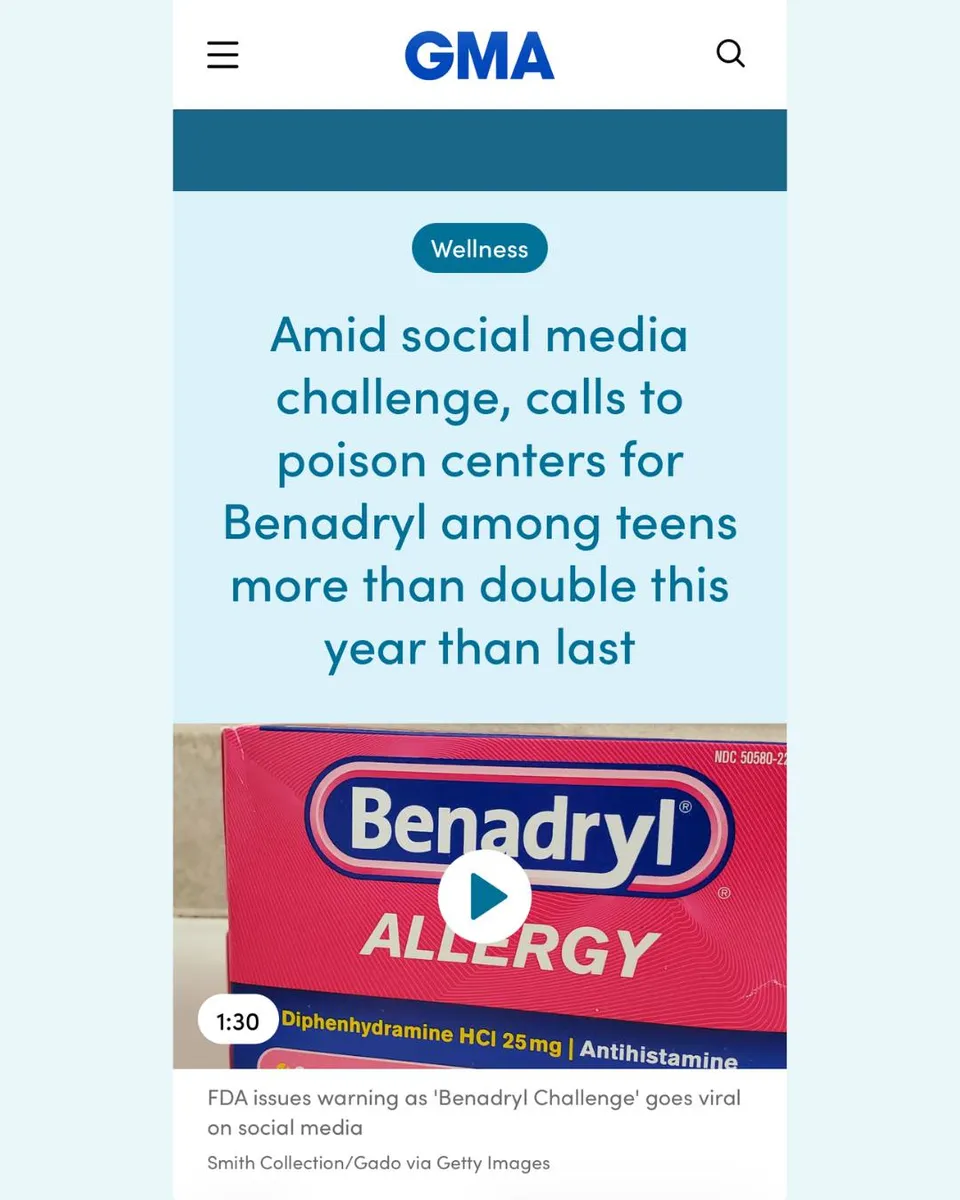
The Benadryl Challenge: Why OTC Drugs Aren't Always Safe
Benadryl abuse among teens is surging, with over 7,000 poison center cases reported in 2024 - nearly 14% intentional. The viral 'Benadryl Challenge' trend highlights how accessible medications can pose serious health risks when misused.
Read More →
Let’s Hear It From the Boys
Young males represent a significant gap in public health research and intervention strategies. This blind spot has real consequences for disease prevention, mental health, and overall population wellbeing. Understanding sex-specific health needs is essential for effective public health policy.
Read More →
The CeraVe Lawsuit, Driscoll's Strawberries, and a Peptide Explosion
Two major product scares expose how wellness trends and media coverage can amplify fears. Learn to critically evaluate health claims and distinguish real risks from manufactured panic.
Read More →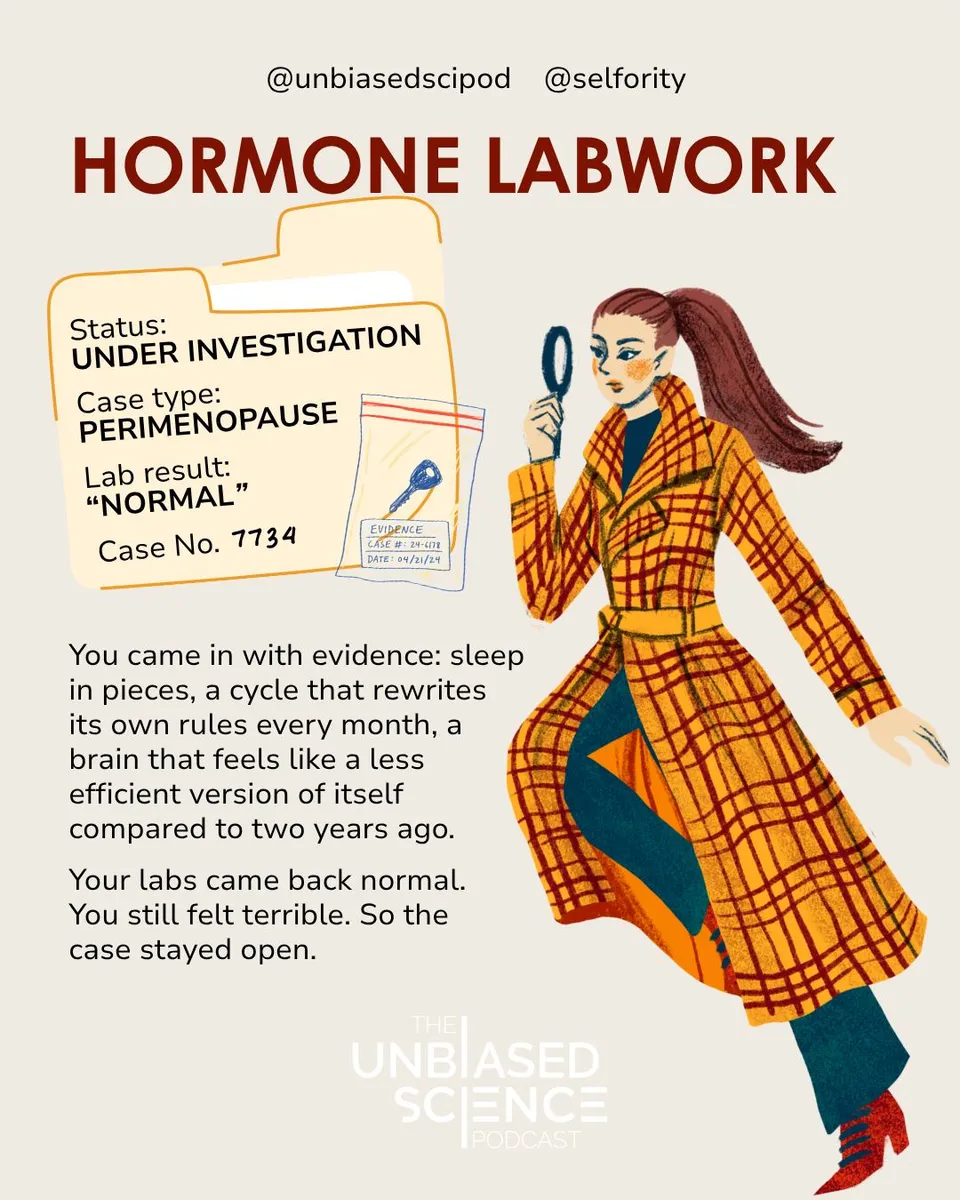
The Perimenopause Case: Why Your Symptoms Matter
Normal labs but exhausted? Brain fog? Changing cycles? This is perimenopause - a clinical diagnosis based on your symptoms, not test results. Follow the investigation into why this condition is often missed and why your experience is the evidence that counts.
Read More →
Does COVID Vaccine Cause Cancer? Debunking 'Turbo Cancer'
We investigated the viral "turbo cancer" claim linking COVID vaccines to cancer. After analyzing the study people cite as proof, we found it doesn't support this assertion. Here's what the evidence actually shows.
Read More →