
Cyclospora outbreak spreads through contaminated produce across U.S.

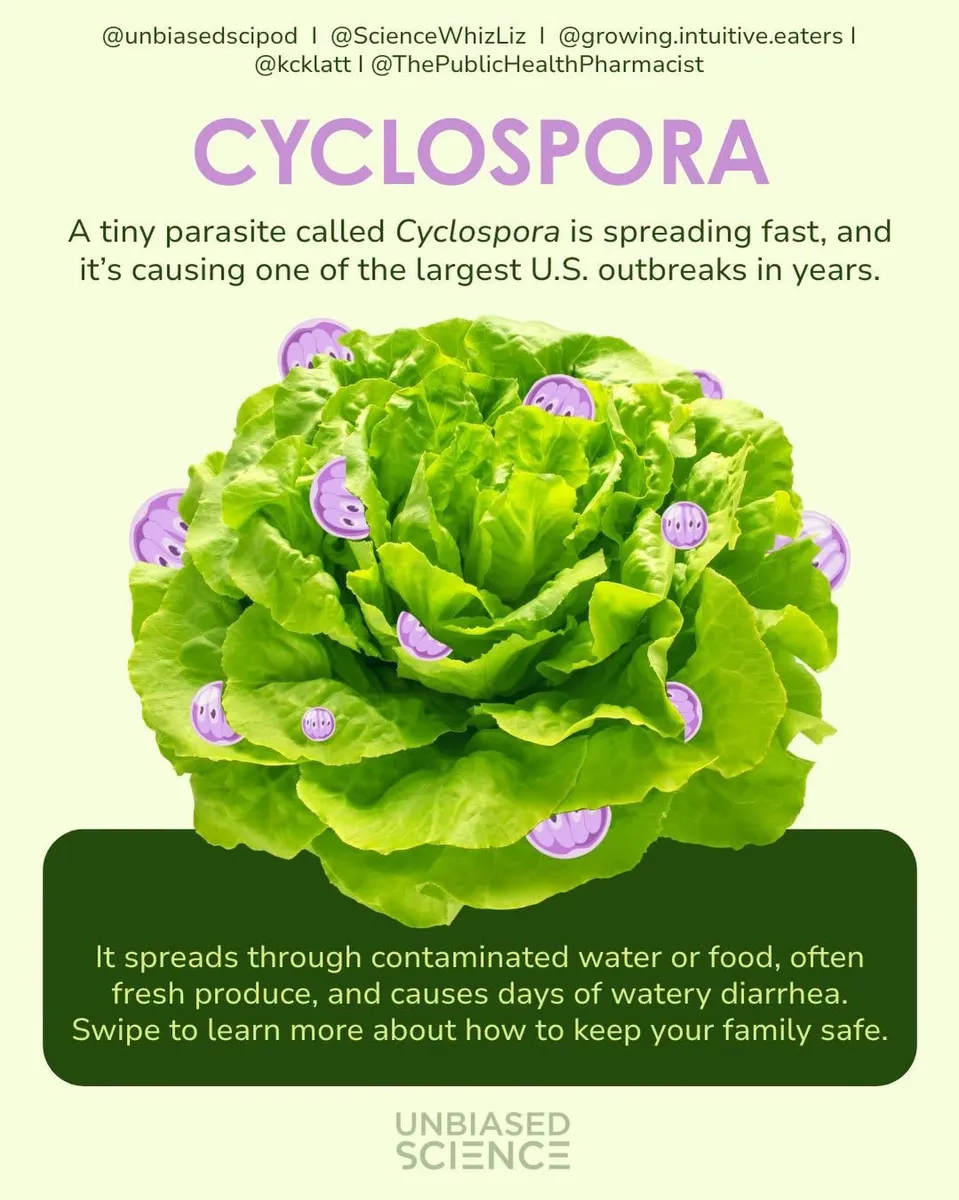
A tiny parasite called Cyclospora is spreading fast, and it’s causing one of the largest U.S. outbreaks in years. It spreads through contaminated food, often fresh produce, and can cause days of watery diarrhea. Cases are climbing in several states. Michigan has the highest number so far, with 1,251 confirmed cases and 36 hospitalizations as of July 9. Keep in mind that symptoms typically take about a week to appear (can range from 2 days to 2 weeks), so official counts are likely behind real ti

A parasitic outbreak is affecting thousands across the U.S., with Michigan reporting over 1,200 cases. The parasite spreads through contaminated fresh produce and causes severe watery diarrhea. Symptoms appear 1-2 weeks after infection, meaning case counts are likely still climbing.

View Original on Instagram
Cyclospora outbreak spreads through contaminated produce across U.S.

Topics

Full Content

Dr. Jess Steier | Unbiased Science

Dr. Jess Steier | Unbiased Science

@unbiasedscipod

A tiny parasite called Cyclospora is spreading fast, and it’s causing one of the largest U.S. outbreaks in years. It spreads through contaminated food, often fresh produce, and can cause days of watery diarrhea. Cases are climbing in several states. Michigan has the highest number so far, with 1,251 confirmed cases and 36 hospitalizations as of July 9. Keep in mind that symptoms typically take about a week to appear (can range from 2 days to 2 weeks), so official counts are likely behind real time. On top of that, Cyclospora isn’t on standard stool panels. A doctor has to order the test by name, so even people who do get checked may be missed. Cyclosporiasis is acquired by eating food or drinking water contaminated with feces from an infected person. Watery, explosive diarrhea is the main symptom to watch for. If it drags on for more than a few days, call your doctor and ask to be tested specifically for it. Thankfully, it’s treatable with antibiotics, and most people make a full recovery. No source has been confirmed yet, but leafy greens, especially bagged salads and lettuce, are the sensible thing to skip for now. Past outbreaks have also involved cilantro, basil, raspberries, snow peas, scallions, and spinach. Rinsing helps but won’t get everything, since this parasite clings to produce. Vinegar rinses and store-bought washes may remove some, but are no guarantee. The reliable move is heat: cooking kills the parasite, so cooked vegetables are the safest bet right now. We’re getting a lot of questions about backyard gardens, local farms, and organic produce. Contamination like this almost always happens upstream in the commercial supply chain, not in a home garden, so your own tomatoes and greens aren’t the concern. Organic versus conventional isn’t the deciding factor either; contamination during growing and harvesting can happen regardless of the label. No specific product or grower has been named yet, so we’re keeping it broad. Currently, investigators are interviewing sick people, asking what they ate and where they shopped, then taking it to the lab in search of more information. (Thank you to the epidemiologists working hard to keep us safe!)

Similar Posts